Technology
Technology for governed enterprise execution.
Enterprise AI becomes operational only when intelligence is connected to identity, policy, workflows and systems that can act.
The Globalnetrix platform separates those concerns into a layered architecture so each request can be understood, authorised, executed and traced without making the language model itself the control plane.
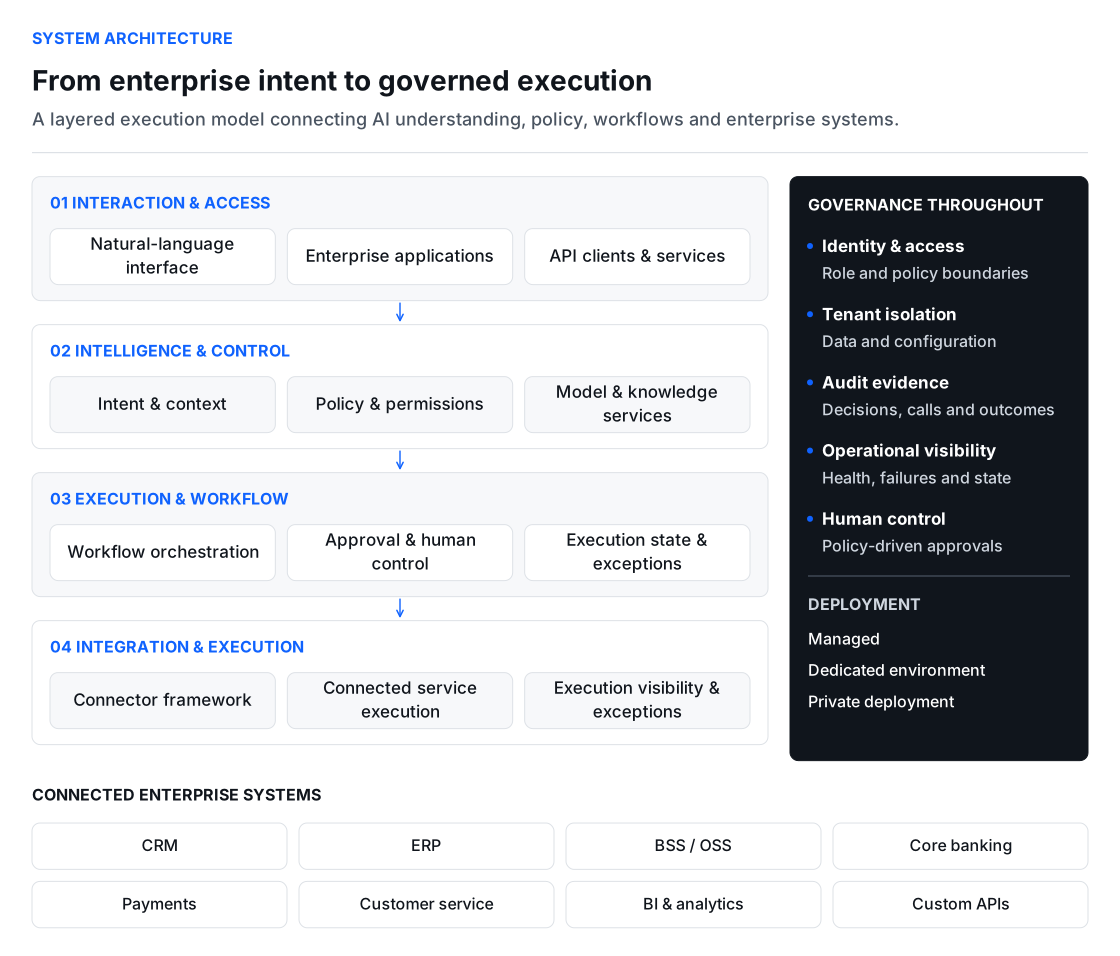
Intelligence is one layer, not the whole system.
A language model interprets intent and context. The platform around it determines what that interpretation is allowed to become.
The intelligence layer identifies the requested outcome, extracts the entities required by the workflow, incorporates relevant organisational context, and asks for clarification when a request is incomplete.
The execution path remains governed by the platform’s permissions, workflow rules and approval controls.
Workflow before action.
Requests resolve to known workflows rather than turning directly into unrestricted system calls.
Workflows define the sequence of steps, their dependencies, conditional paths, approval points and exception handling. This keeps execution deterministic where the business process requires it while still allowing natural-language interaction at the edge.
Human approval can remain in the path for sensitive or high-impact actions.
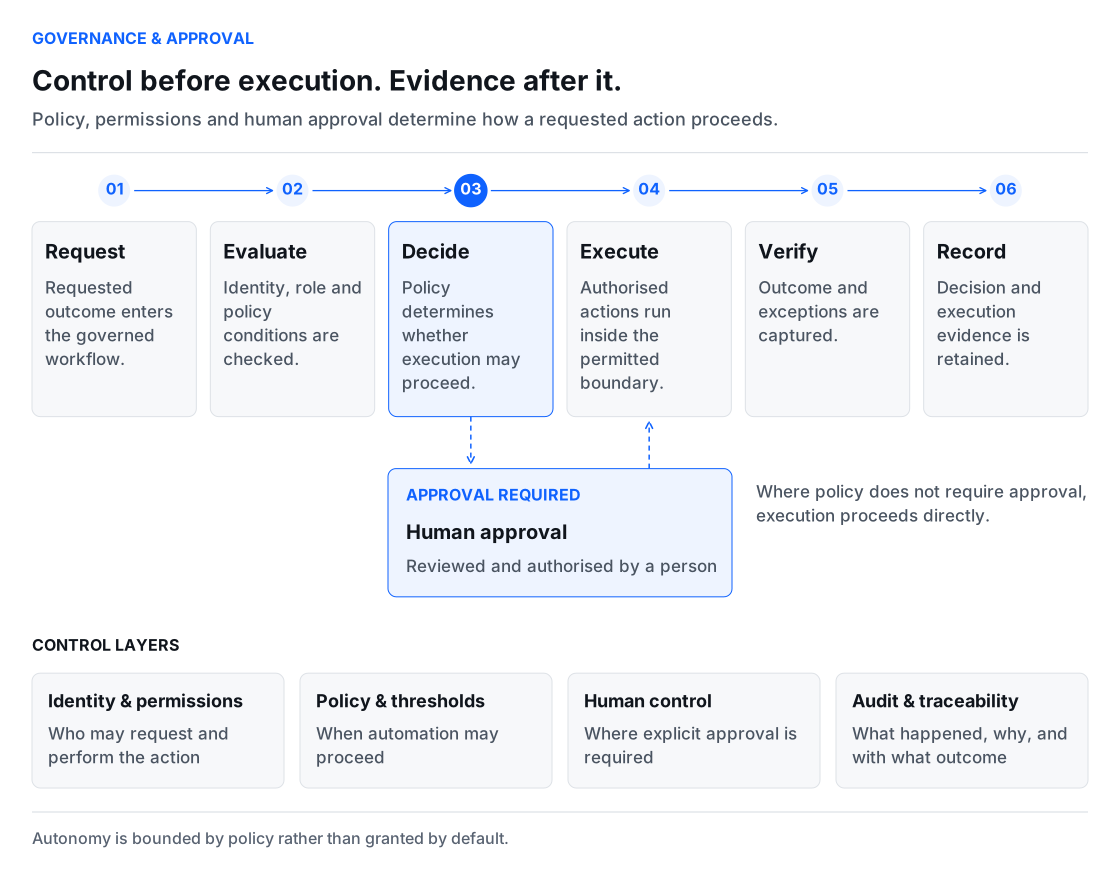
Integration without replacing the systems around it.
The integration layer connects existing enterprise applications, services and data sources through APIs and purpose-built adapters.
Different external APIs are translated into a consistent internal action model. Workflows can therefore operate against governed actions instead of embedding one-off integration logic throughout the platform.
Credentials and tokens are managed centrally. Integration activity is logged for operational review and auditability.
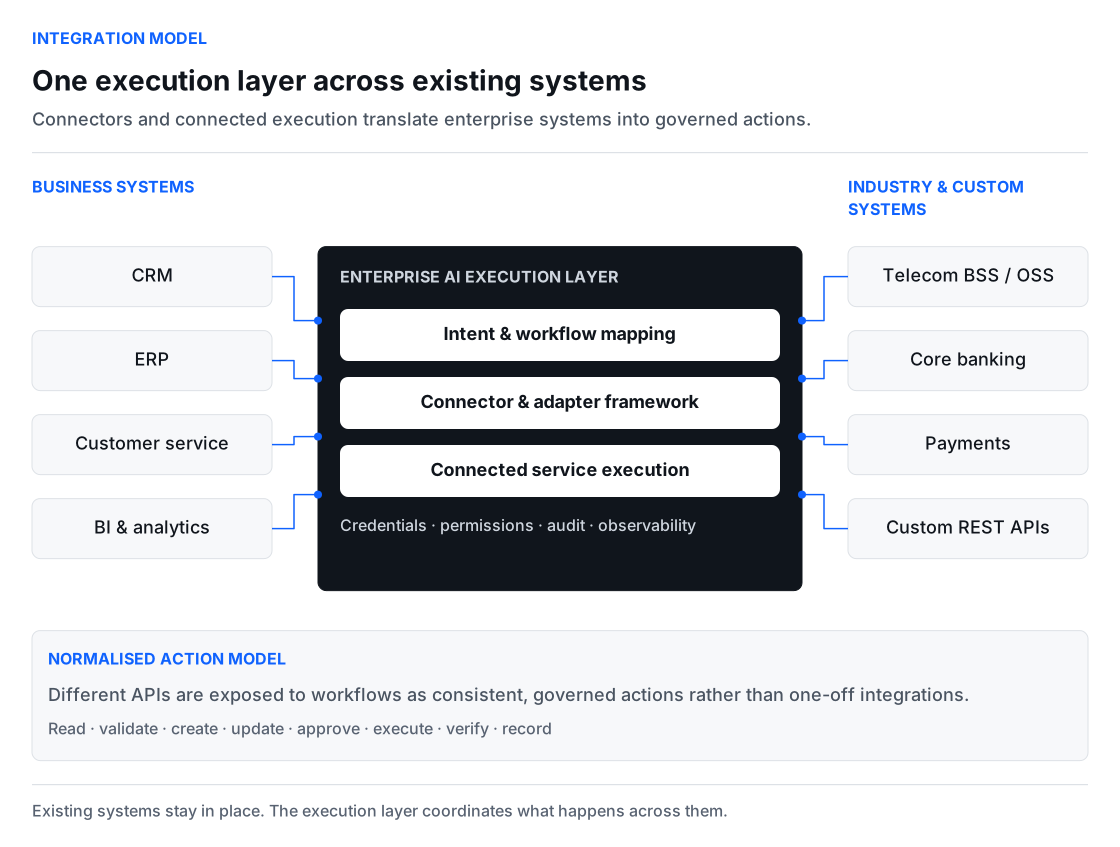
Connected execution.
Once a request is understood and authorised, the workflow coordinates the required actions across connected systems.
The execution layer carries out permitted service calls in the required sequence, surfaces failures with context, and records the resulting system activity.
Governance is part of the architecture.
Security controls do not sit beside the execution model; they participate in it.
Role-based access — Requests and actions operate within the permissions assigned to the requester.
Segregation of duties — Sensitive operations can be divided across roles rather than concentrated in one account.
Human approval — Workflow-specific approval gates keep people in the path where policy requires them.
Tenant isolation — Data, configuration and credentials are separated between tenants.
Audit trail — Requests, decisions, system calls and outcomes are recorded for review.
Model-independent by design.
The model is replaceable infrastructure, not a permanent platform dependency.
A provider-abstraction layer separates model access from application logic. That gives the architecture room to select models according to workload, availability, jurisdiction and procurement requirements rather than binding the platform to one vendor.
Retrieval over organisational knowledge provides context to the intelligence layer without turning a public model into the system of record.
Deployment aligned to the environment.
Managed platform — Centrally operated service delivery.
Dedicated environment — Greater infrastructure isolation for stricter governance requirements.
Private deployment — Customer-controlled infrastructure for environments that require it.
The deployment model changes where the platform runs; it does not change the core workflow and governance model.
Engineering approach
The public architecture focuses on principles rather than implementation libraries.
API-first integration — External systems are treated as governed services with explicit contracts.
Typed, modular components — Boundaries between interaction, intelligence, workflow, integration and control remain explicit.
Schema-validated data flows — Inputs and system interactions are validated before execution.
Automated testing — Functional and integration behaviour is verified continuously as the platform evolves.
Observable execution — Operational activity is instrumented so authorised teams can inspect outcomes and exceptions.
Detailed implementation information is shared during qualified technical and security review where appropriate.
Take the architecture into your environment.
The useful technical review starts with your systems, your control requirements and a real workflow.