Enterprise AI platform
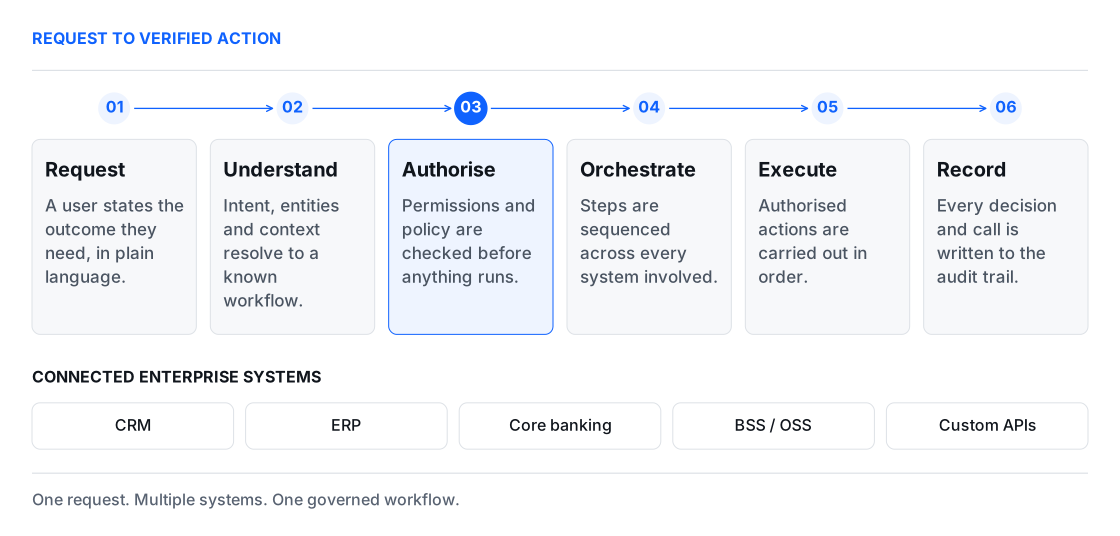
The Globalnetrix platform is the execution layer between AI understanding and enterprise systems — interpreting intent, checking permissions, orchestrating multi-step workflows, and recording each action and outcome.
Most enterprise AI answers questions, drafts content, or recommends a next step. Someone still has to open the systems and do the work.
The Globalnetrix platform does the work.
Understand — Intent, entities and context resolve to a known workflow.
Authorise — Permissions, policy and approval requirements are checked before anything executes.
Orchestrate — Steps are sequenced across the systems the task touches.
Record — Each decision and system call is written to an audit trail.
Example: eSIM activation for an existing subscriber
Interpret — Resolve the subscriber, active tariff and provisioning action required.
Validate — Confirm account standing, device eligibility and entitlement rules.
Authorise — Check the operator’s permissions against the requested action.
Orchestrate — Retrieve the subscriber record from CRM, request an eSIM profile from the provisioning platform, and update the subscription in the billing system.
Approve — Route to a supervisor where the action falls above the configured threshold.
Execute — Carry out each authorised step in sequence, surfacing failures with the context needed to resolve them.
Confirm — Return the activation status and write the execution record.
A fragmented multi-system process becomes one governed request.
Enterprise processes rarely live in a single application. The Globalnetrix platform coordinates them through connectors, workflows and governed execution.
Integration — Connect enterprise applications, services and data sources through one integration layer, with credentials and tokens managed centrally.
Workflow orchestration — Multi-step processes with conditional branching, dependencies, approval steps and exception handling.
Intent and decision — Interpret natural-language requests and route them to the right workflow. Ask for clarification when a request is incomplete.
Connected execution — Call and sequence services across connected systems as a single workflow rather than a set of separate integrations.
Access control — Role-based permissions, segregation of duties and per-tenant policy configuration.
Operational visibility — Visibility into automated activity, workflow outcomes and integration health, with role-based drill-down.
Automation should not require replacing the infrastructure around it. The Globalnetrix platform connects to existing applications and services through APIs and purpose-built adapters.
CRM · ERP · Telecom BSS/OSS · Core banking and payments · Customer service platforms · Business intelligence · Internal applications · Custom REST APIs
Where no standard connector exists, the adapter framework supports organisation-specific services.
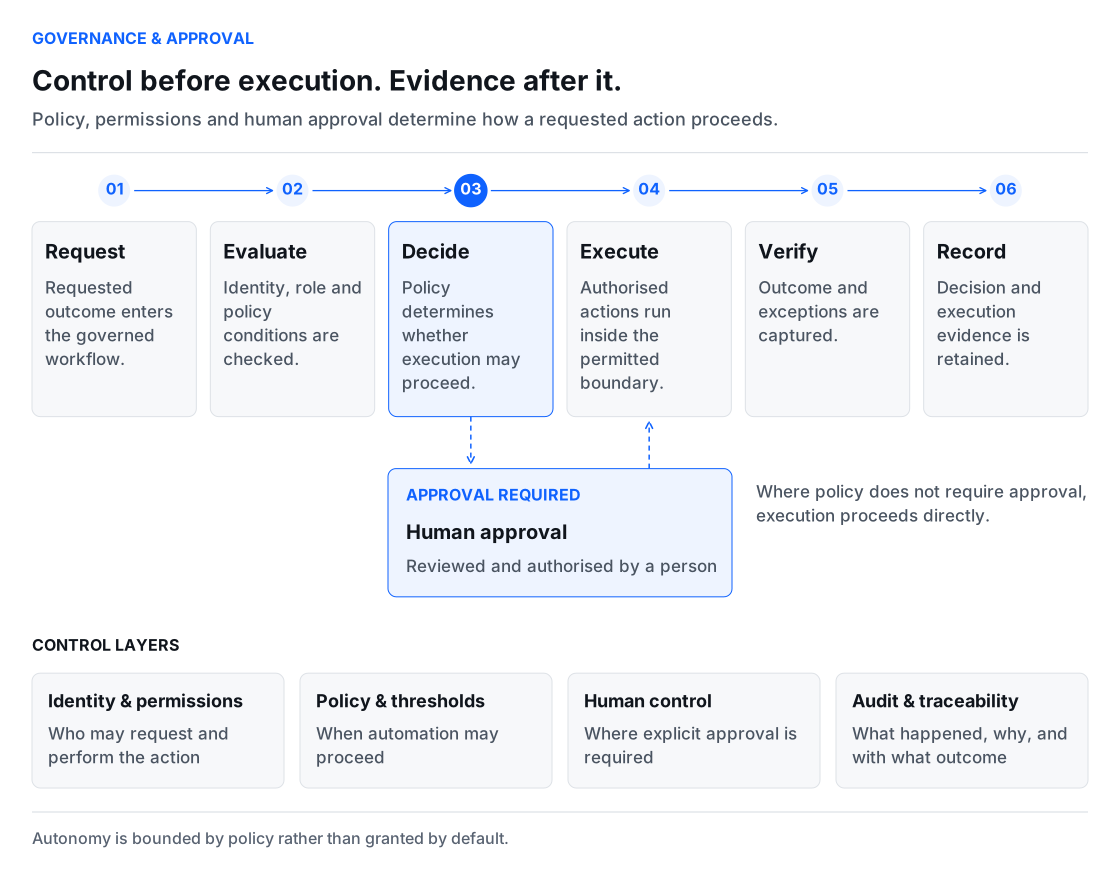
The risk profile changes the moment an automated process can write to a production system. The Globalnetrix platform puts governance around execution so an organisation controls what an automated process may do, under what conditions, and where a person stays in the loop.
Permissions — Actions execute within defined user and system permissions.
Approval gates — High-impact workflows can require human authorisation before proceeding.
Execution boundaries — Automated actions stay within configured permissions, policies and approval rules.
Audit trail — System calls, workflow decisions and outcomes are recorded for operational review and audit.
Tenant isolation — Data, configuration and credentials are isolated per tenant.
Telecommunications — Service activation, subscription changes, number portability and customer operations across BSS, CRM and provisioning platforms.
Banking and financial services — Controlled workflows across customer, operational and financial systems, with approval gates and traceability.
Enterprise operations — Fragmented applications and multi-step processes connected through one workflow and integration layer.
Managed platform — Centrally operated, with maintenance and updates handled for you.
Dedicated environment — Isolated deployment for stricter infrastructure or governance requirements.
Private deployment — Runs on customer-controlled infrastructure.
Capable AI in an enterprise depends less on model freedom than on what surrounds it: clear permissions, bounded actions, reliable integration, human control at the right points, and a record of what happened.
Model-independent architecture · Integration-first design · Human oversight where it matters · Structured execution · Traceable outcomes
For organisations with demanding integration, deployment or governance requirements, the Globalnetrix platform offers a structured evaluation built around one real operational workflow.
Work directly with the team to map the systems involved, define the control model, validate the integration path and establish a practical route to deployment.
If you are working out how AI can take part in real operational workflows rather than describe them, we should talk.