Platform
The execution layer between AI and your enterprise systems.
The Globalnetrix platform interprets a request, checks what the requester is permitted to do, coordinates the steps across the systems involved, and records what happened.
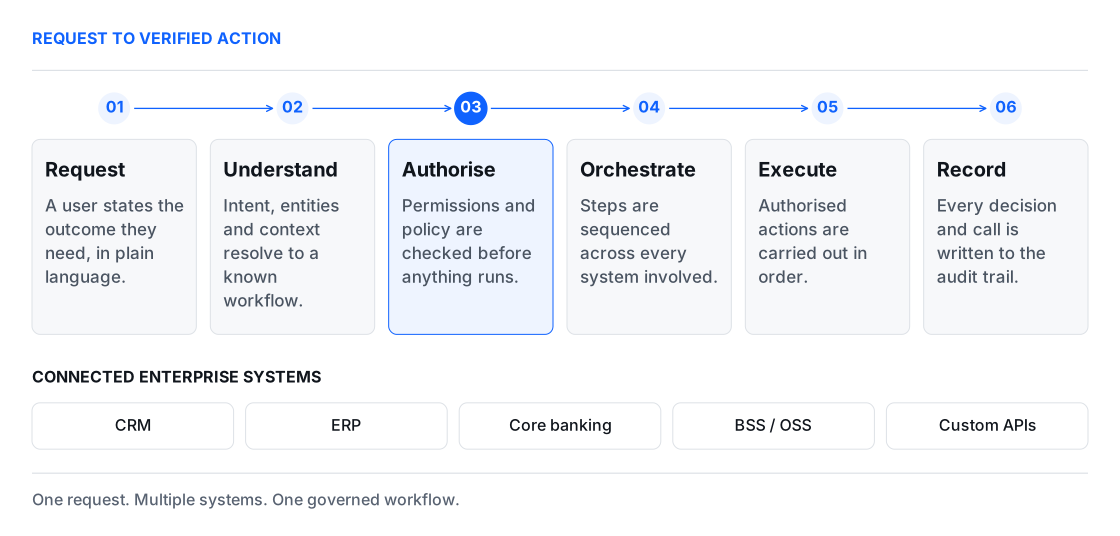
The gap this closes
Enterprise AI has largely stopped at the point of understanding. A model can read a request, summarise a policy, or draft a reply. Someone then opens multiple systems and does the work by hand.
The obstacle is everything that has to be true before software is allowed to act inside a production environment: knowing who is asking, what they may do, which systems are involved, what order the steps run in, when a person has to sign off, and what evidence remains afterwards.
The Globalnetrix platform is built around that problem rather than around the model.
How a request becomes an action
Understand
A request arrives in natural language. The platform identifies what is being asked, which entities it refers to, and which workflow applies. Where a request is incomplete or ambiguous, it asks rather than guesses.
Authorise
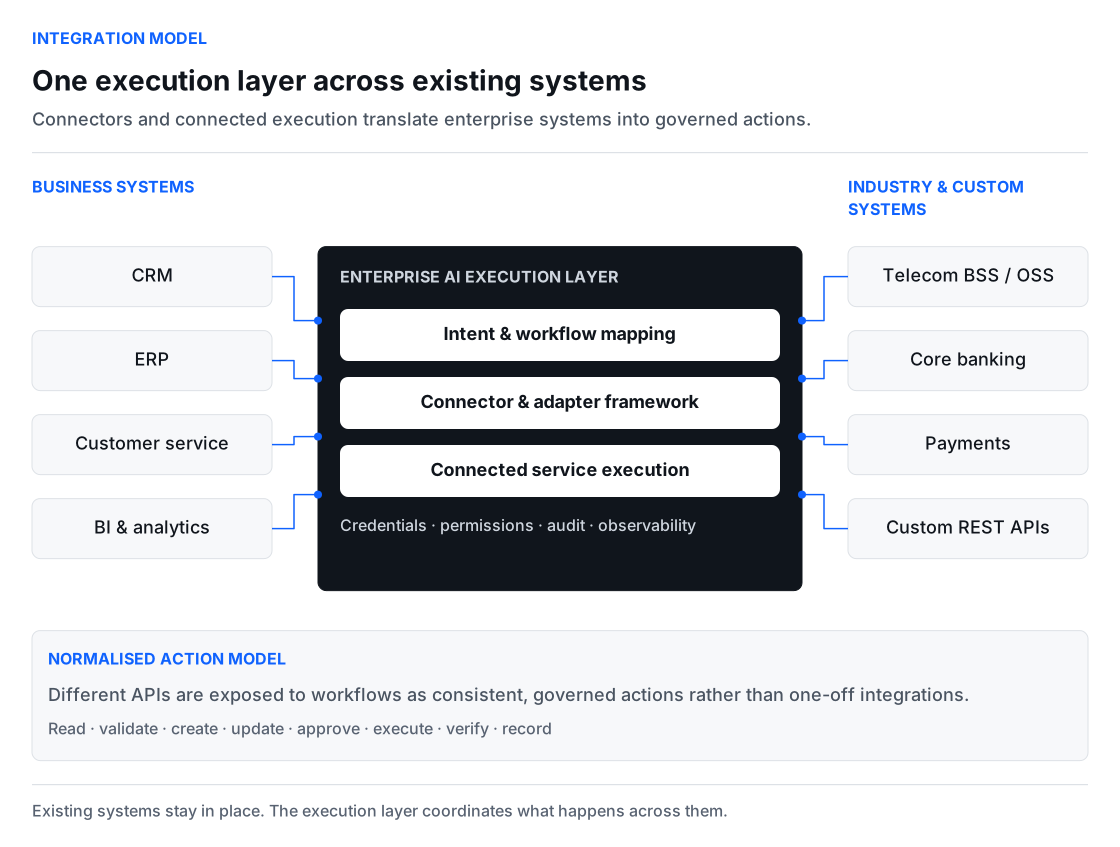
Before anything executes, the request is evaluated against the requester’s role and the policies configured for that action. Permission is checked at the point of execution.
Orchestrate
The workflow determines which systems are involved and in what order. Dependencies and conditional branches are resolved, and exceptions surface with context.
Execute and record
Authorised actions are carried out against connected systems. System calls, decisions and outcomes are written to the audit trail.
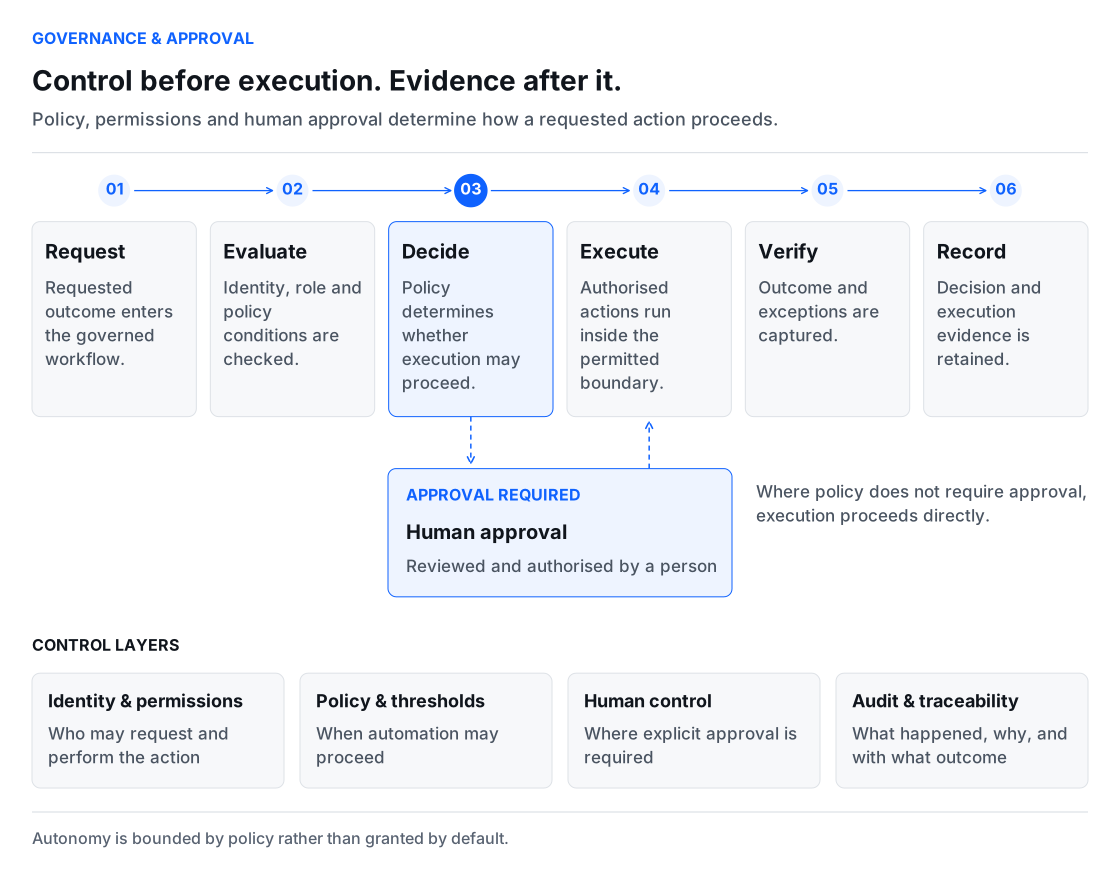
What the platform is made of
Integration layer
Connects enterprise applications, services and data sources through a common integration layer. Connectors and adapters translate each system’s API into a consistent internal action model so workflows do not have to be rebuilt around every individual API.
Credentials and tokens are managed centrally and protected in transit and at rest. Integration activity is logged.
Workflow engine
Business processes are expressed as reusable workflows with multi-step sequences, conditional branching, dependencies and defined exception paths. Workflows expose failures with the context needed to resolve them.
Intent and decision layer
Interprets natural-language input, extracts the entities a workflow needs, and routes a request to the relevant workflow and systems. Incomplete requests trigger clarification rather than a best guess.
Access control and governance
Role-based permissions and segregation of duties constrain what a requester may execute. Sensitive or high-value actions can require explicit human authorisation before proceeding.
Multi-tenant architecture
Data, configuration and credentials are isolated per tenant. Connectors, workflows and access policies are configured independently for each tenant.
Operational visibility
Automated activity, workflow outcomes and integration health remain visible to authorised roles. System calls, workflow decisions and execution outcomes are retained for review.
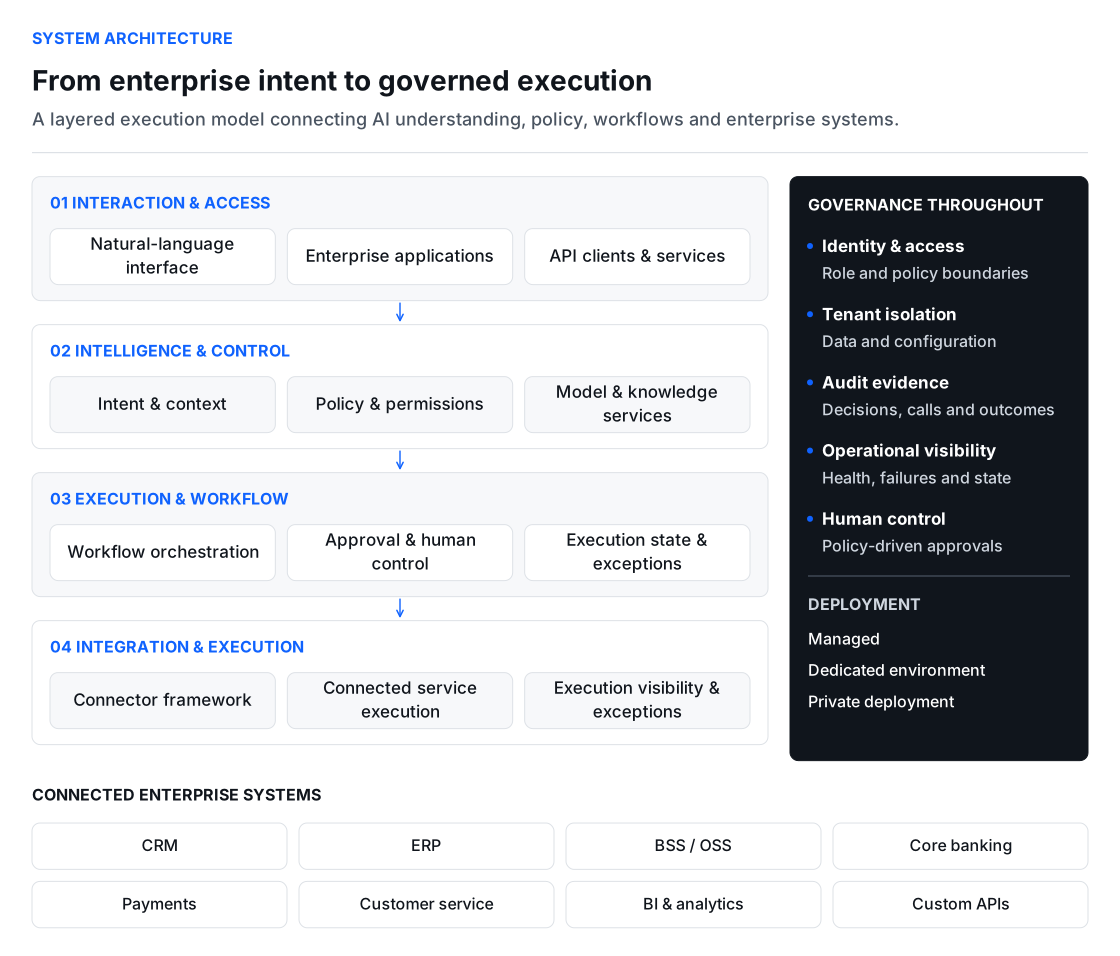
Built to sit on top of what you already run
Automation should not require replacing the systems around it. The Globalnetrix platform connects to applications already in place rather than asking an organisation to consolidate onto a new one.
CRM · ERP · Telecom BSS/OSS · Core banking and payments · Customer service platforms · Business intelligence · Internal applications · Custom REST APIs
Where no standard connector exists, the adapter framework supports organisation-specific services.
Deployment
Managed platform — Centrally operated, with maintenance and updates handled for you.
Dedicated environment — Isolated deployment for stricter infrastructure or governance requirements.
Private deployment — Runs on infrastructure the customer controls for environments requiring greater infrastructure isolation.
Deployment is determined by technical, security and operational requirements rather than by tier.
Model-independent by design
The language model is one component. It is not the platform, and it is not fixed.
The Globalnetrix platform uses a provider-abstraction layer so model selection is an architectural configuration rather than a hard dependency. This supports continuity, workload-specific model selection and procurement requirements.
Retrieval over organisational knowledge supplies context to the intelligence layer while keeping that knowledge under the platform’s governance model.
See it against your own systems.
Tell us which systems are involved and what the process looks like today, and we can walk through how the workflow maps across them.